
One of the most common questions I hear from patients is: “What should I eat during cancer treatment?”
The truth is, there isn’t a single “cancer diet” that works for everyone. Your nutritional needs can vary depending on the type of cancer, the treatment you’re receiving, and how your body responds. That said, there are some general principles that almost everyone can benefit from during treatment.
No Magic Diet, But Whole Foods Matter
Research has not shown that any one diet—whether keto, Mediterranean, or plant-based—improves cancer treatment outcomes across the board. What matters most is eating a variety of whole, minimally processed foods that support your body’s strength, energy, and healing (American Cancer Society, 2024).
Working with a registered dietitian who specializes in oncology can be especially helpful, as they can tailor a plan to your individual needs (Academy of Nutrition and Dietetics, 2023).
How Much and How Often Should You Eat?
Cancer treatments like chemotherapy and radiation can affect your appetite, taste, and digestion. To help manage this:
- Eat small, frequent meals. Aim for 5–6 light meals or snacks throughout the day instead of three large meals. This can help with nausea, early fullness, and maintaining energy (NCI, 2023).
- Keep snacks on hand. Crackers, dry cereal, or pretzels can be useful if nausea suddenly hits.
- Stay hydrated. Water, clear broths, or diluted juices help prevent dehydration, especially if you’re experiencing vomiting or diarrhea.
What to Eat During Treatment
Prioritize Protein
Protein is essential for repairing cells and supporting your immune system. A good rule of thumb is at least 0.5 grams of protein per pound of body weight per day (Rock et al., 2022). Protein-rich options include:
- Eggs
- Lean meats (chicken, turkey)
- Fish and seafood
- Beans, lentils, and chickpeas
- Greek yogurt, cottage cheese
- Tofu or tempeh
Fill Most of Your Plate with Plants
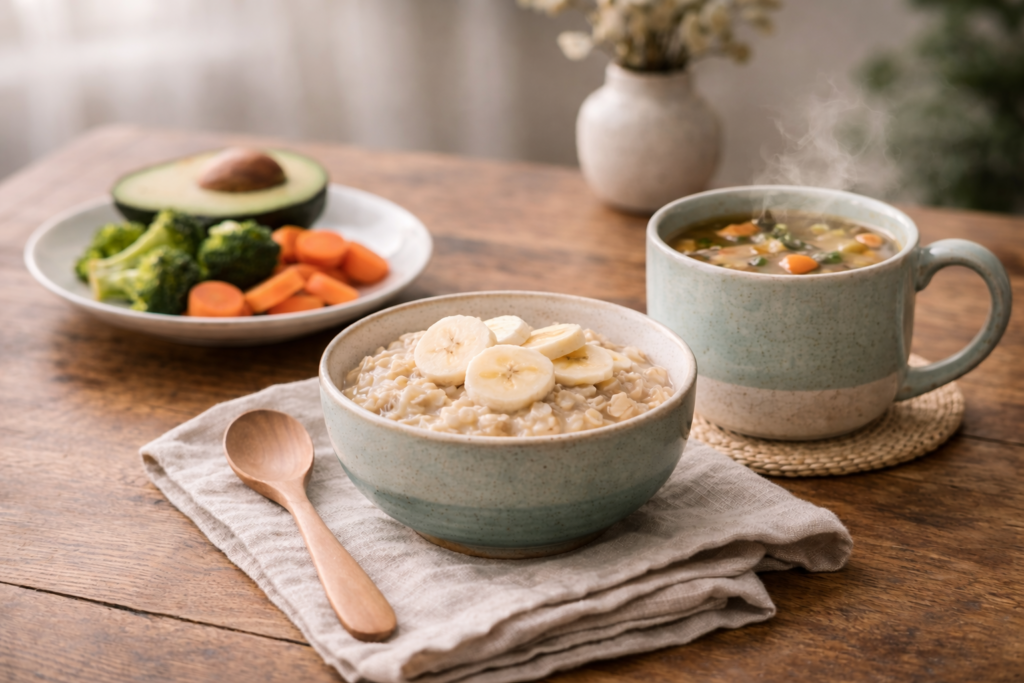
About three-quarters of your plate should come from vegetables, fruits, whole grains, and legumes. These foods provide vitamins, minerals, antioxidants, and fiber, which can help digestion and overall health (American Cancer Society, 2024). Examples:
- Oatmeal topped with fresh fruit
- Yogurt with berries
- Dates or dried fruit for a quick energy boost
- Whole grain toast with nut butter
- Hearty vegetable soups with crackers
Include Healthy Fats
Fats provide energy and can help if you’re struggling with weight loss. Choose sources like:
- Olive oil, avocado, nuts, and seeds
- Nut butters (almond, peanut, cashew)
- Fatty fish like salmon (Arends et al., 2021)
Foods to Limit or Avoid
Because treatments like chemotherapy can weaken your immune system, it’s important to reduce the risk of foodborne illness:
- Avoid raw or undercooked meat, poultry, and seafood.
- Skip unpasteurized dairy products and juices.
- Wash fruits and vegetables thoroughly.
- Be cautious with buffets, salad bars, or foods sitting out at room temperature (NCI, 2023).
It’s also a good idea to limit:
- Excess added sugar (sodas, sweets)
- Highly processed foods (fast food, packaged snacks)
- Alcohol, unless cleared by your oncology team (Rock et al., 2022)
✅ Key Takeaway:
There’s no “one-size-fits-all” cancer diet. Instead, focus on:
- Small, frequent meals
- Plenty of protein
- A plant-forward plate (fruits, veggies, whole grains)
- Safe food practices to avoid infections
And remember: your needs may change throughout treatment. A dietitian can adjust your plan to help you feel your best and stay strong.
📚References:
- American Cancer Society. (2024). Nutrition for people with cancer. Retrieved from https://www.cancer.org/cancer/managing-cancer/nutrition/nutrition-for-people-with-cancer.html
- National Cancer Institute. (2023). Eating hints: Before, during, and after cancer treatment. U.S. Department of Health & Human Services. Retrieved from https://www.cancer.gov/publications/patient-education/eatinghints.pdf
- Rock, C. L., Thomson, C. A., Sullivan, K. R., Howe, C. L., & Kushi, L. H. (2022). Nutrition and physical activity guidelines for cancer survivors. CA: A Cancer Journal for Clinicians, 72(3), 230–262. https://doi.org/10.3322/caac.21719
- Academy of Nutrition and Dietetics. (2023). Oncology nutrition: Evidence-based practice guidelines. Retrieved from https://www.oncologynutrition.org/erfc/evidence-based-practice-guidelines/
- Arends, J., Strasser, F., Gonella, S., Solheim, T. S., Madeddu, C., Ravasco, P., & Muscaritoli, M. (2021). Cancer cachexia in adult patients: ESMO Clinical Practice Guidelines. Annals of Oncology, 32(12), 1637–1652. https://doi.org/10.1016/j.annonc.2021.09.006
⚠️Legal Disclaimer:
This information is for educational purposes only and is not a substitute for personalized medical advice. Always follow your oncology team’s instructions and discuss any changes in your treatment plan with them.